

En bref
- Explore the language of AI: core terms, how they relate to real-world projects, and why terminology matters for teams and governance.
- Understand foundational concepts (AI, ML, DL, neural networks) and how they map to practical workflows across major AI platforms such as Google AI, OpenAI, and DeepMind.
- Learn how terminology evolves with trends in regulation, explainability, and tooling from AWS AI, Microsoft Azure AI, NVIDIA AI, and Hugging Face.
- Discover the practical impact of terms through case studies, glossaries, and decision-making aids that help bridge research and production.
- Access curated resources and quick references, including dofollow links to credible AI glossaries and guides.
Understanding the language of artificial intelligence is essential for anyone aiming to leverage this transformative technology in 2025. The glossary-like vocabulary surrounding AI is not a mere footnote; it shapes how teams define requirements, measure success, and communicate risk. In this guide, readers will encounter the fundamental terms—such as machine learning, neural networks, and transformers—alongside more advanced notions like variational autoencoders and reinforcement learning. Yet the value of AI terminology extends beyond definitions. It informs how organizations collaborate with vendors, vendors’ ecosystems, and the standards that govern data handling, model evaluation, and deployment. In practical terms, a shared vocabulary reduces misinterpretations when engineers, product managers, and executives discuss capabilities, limitations, and risk profiles. It also helps teams articulate requirements for governance, fairness, and transparency—areas that increasingly matter to regulators, customers, and the public at large. This guide uses real-world examples and the perspectives of leading players in the field—Google AI, OpenAI, DeepMind, IBM Watson, AWS AI, Microsoft Azure AI, NVIDIA AI, Baidu AI, Meta AI, and Hugging Face—to illustrate how terminology informs decisions at every stage of an AI program. To deepen understanding, you can consult curated resources linked throughout, such as glossaries and guides on the broader AI vocabulary.
Understanding AI Terminology: Core Concepts, Definitions, and Context
The foundational layer of AI terminology begins with a precise hierarchy of concepts. At the top sits Artificial Intelligence as the broad discipline; below it, Machine Learning (a subset that enables systems to learn from data) and Deep Learning (a subfield using multi-layered neural networks). In practice, teams talk about supervised versus unsupervised learning, reinforcement learning, and neural networks as the engines behind intelligent behavior. As projects scale, terminology expands to include specialized constructs such as transformers, generative AI, and variational autoencoders (VAEs), each with practical implications for data processing, model architecture, and output quality.
To anchor these terms in real workflows, consider how a data science team at a technology company translates theoretical vocabulary into a development lifecycle. The term transformer signals a family of architectures that excels at processing sequential data, making it central to natural language processing and vision-language models. In contrast, GANs (generative adversarial networks) often feature in creative or data augmentation tasks, where fidelity and realism are critical. Meanwhile, explainability and interpretability—terms addressing how models arrive at decisions—inform governance and risk management, particularly in regulated industries or consumer-facing applications. For teams, a shared vocabulary helps articulate requirements: e.g., “We need a model with high precision and moderate recall for a medical screening task,” or, “We require explainability to satisfy regulatory demands.”
The glossary also captures the ecosystem around AI tooling and platforms. Players across the industry—Google AI, OpenAI, DeepMind, IBM Watson, and others—offer frameworks, libraries, and services that influence terminology adoption. For instance, discussions around offline versus online inference, edge AI, and model as a service reflect architectural choices that shape both language and practice. Terms associated with data handling—training data, validation set, test set, and data drift—inform how teams monitor models post-deployment and when to retrain. The practical takeaway is that a deliberate, well-understood terminology acts as a catalyst for faster, safer, and more transparent AI development.
Across the 2025 landscape, several guiding themes emerge in AI terminology. First, standards and interoperability matter as organizations adopt cloud and edge solutions from cloud providers—AWS AI, Microsoft Azure AI, and NVIDIA AI among them—while leveraging open-source ecosystems like Hugging Face. Second, platform ecosystems influence how teams term capabilities, from language models to multimodal models, including vision and audio modalities. Third, ethics and governance are no longer afterthoughts; terms like bias, fairness, and explainability guide policy design and product strategy. To connect theory with practice, several credible resources offer lexical maps and definitions that translate academic ideas into actionable language for engineers, product managers, and executives. For readers seeking structured references, the following links provide comprehensive glossaries and term explanations: A Guide to Understanding AI Vocabulary, Demystifying AI: A Guide to Key Terminology, Understanding the Language of AI: Key Terms Explained, Understanding the Language of AI: A Guide to Key Terminology, and Decoding AI: Understanding the Language of AI.
| Term | Definition (concise) | Representative Context |
|---|---|---|
| AI | Broad field of systems capable of performing tasks that typically require human intelligence. | Speech recognition, planning, perception, decision-making. |
| Machine Learning | Subset of AI enabling systems to learn from data without explicit programming. | Recommendation engines, fraud detection, predictive maintenance. |
| Deep Learning | Subfield of ML using neural networks with many layers to model complex patterns. | Image and speech analysis, natural language processing. |
Further reading and references offer deeper dives into terminology and its application in 2025. For a broader lexicon, consult materials covering transformers, reinforcement learning, and generative AI, and explore how vendors integrate these terms into their product roadmaps. Links to reputable glossaries help both newcomers and seasoned practitioners align on definitions, reducing miscommunication as AI initiatives scale across organizations.

The Practical Impact of AI Terminology on Projects and Teams
In the day-to-day workflow of AI programs, terminology translates into requirements, success criteria, and governance frameworks. A project begins with a lexicon of terms that define the problem space, the data ecosystem, and the intended behavior of the system. For instance, the distinction between supervised and unsupervised learning informs data labeling strategies and evaluation metrics. When a team discusses model drift, they are signaling the need for ongoing monitoring, dataset versioning, and periodic retraining. These concepts drive architecture decisions—whether to favor on-device inference for latency-sensitive applications or to leverage cloud-scale inference pipelines for cost efficiency and scalability. The terminology shapes governance: explainability requirements, bias mitigation strategies, and risk controls become concrete tasks with defined owners and timelines.
Consider a case study of a health-tech startup building an AI-powered triage assistant. The team must articulate requirements for safety and reliability. They distinguish between precision (positive predictive value) and recall (sensitivity) to optimize patient outcomes. They adopt transformer-based language models for patient communication, while enforcing privacy and data minimization policies. They implement explainability features so clinicians can understand and trust model suggestions, aligning with regulatory expectations. Throughout, the vocabulary guides risk assessment, stakeholder communication, and the translation of research breakthroughs into a production-ready service. In this way, terminology is not simply academic; it is the ledger by which teams record decisions about architecture, data governance, and user safety.
Industry ecosystems further shape terminology and its adoption. The landscape includes cloud-native AI services from AWS AI and Microsoft Azure AI, specialized hardware acceleration from NVIDIA AI, and research-driven platforms from Google AI and OpenAI. Each ecosystem emphasizes particular terms—such as latency budgets, scalability guarantees, or multimodal capabilities—that influence how teams plan, implement, and evaluate AI systems. In practice, teams will define Model cards, evaluation dashboards, and risk profiles that reflect their chosen platform strategy. For readers seeking practical references, the following links provide structured glossaries and guides to AI terminology that are broadly recognized in the field: Understanding the Language of AI: A Guide to Key Terminology, Understanding the Language of AI, Part 3, Understanding the Language of AI, Part 2.
Practical examples bring the terminology to life. A multinational enterprise may standardize a glossary across teams to ensure consistent language in procurement, vendor negotiations, and governance reviews. They will spell out how terms like serving versus training affect cost accounting and release schedules. They might compare offline and online inference modes, highlighting trade-offs in latency, accuracy, and data security. In addition, executives frequently rely on a shared vocabulary when evaluating vendor offerings from major players such as IBM Watson or Baidu AI, which helps align expectations around capabilities like natural language understanding or computer vision. The upshot is clear: a robust terminology framework speeds up decision-making, improves collaboration, and reduces the likelihood of misalignment between research, development, and business objectives.
- Project scoping and requirement elicitation rely on precise terms to define success metrics.
- Governance and risk management depend on explainability, bias mitigation, and data privacy vocabulary.
- Vendor selections are guided by the vocabulary of platform capabilities and service-level commitments.
| Section Term | Key Implication | Team Impact |
|---|---|---|
| Inference | Applying a trained model to new data in real-world use. | Decisions about latency, hardware, and deployment strategy. |
| Drift | Change in data distribution over time that reduces model performance. | Triggers monitoring, retraining, and feature-version control. |
| Explainability | Ability to interpret model decisions and provide justifications. | Regulatory readiness and stakeholder trust enhancement. |
For readers seeking a practical glossary and deeper terminology, the following resources offer structured insights and examples: Demystifying AI: Key Terminology, Key Terms Explained, and A Guide to Key Terminology.
A Glossary for Builders: Foundational AI Terms and How They Relate
For builders and engineers, a practical glossary translates theory into lines of code, data pipelines, and model architectures. This section dives into foundational terms such as AI, machine learning, deep learning, and neural networks, followed by more specialized constructs used daily in modern AI projects. The relationship among these terms is not merely academic; it defines the capabilities a team can achieve, the constraints they must manage, and the trade-offs they accept.
Within the AI landscape, machine learning is the core engine that enables computers to improve from experience. It is the umbrella under which supervised, unsupervised, and reinforcement learning reside. When teams discuss neural networks, they are often referring to layered computational graphs that enable abstract representation learning. The leap to deep learning introduces the depth and complexity required to model particularly intricate patterns, such as voice, image, or multimodal data. A common misunderstanding arises when teams assume AI is synonymous with machine learning; in reality, AI is the broader concept that includes rule-based systems, optimization, and planning in addition to ML. The nuance matters because it informs project scope and risk assessment.
Terminology also covers generative AI and transformers, which have become central to language models and creative systems. A typical project involves defining data sources, training objectives, evaluation metrics, and deployment strategies. In 2025, platforms from major players—Google AI, OpenAI, DeepMind, IBM Watson, AWS AI, Microsoft Azure AI, NVIDIA AI, Baidu AI, Meta AI, and Hugging Face—provide libraries, APIs, and pre-trained models that shape the language teams use. Practically, teams frame tasks around terms like transfer learning, fine-tuning, and evaluation metrics, which inform time-to-market, cost, and risk. The glossary here includes quick-reference definitions that can be taken into the sprint planning and code reviews to keep everyone aligned on capabilities and expectations.
The following table provides a distilled view of core terms and their place in real-world pipelines. Note how each term connects to data workflows, model building, and governance considerations:
| Term | What it means | Why it matters in practice |
|---|---|---|
| Transformer | A neural network architecture that uses attention mechanisms to process sequences. | Key for natural language processing and multimodal models; enables long-range dependencies handling. |
| Generative AI | Models that produce new content, such as text, images, or audio, based on learned patterns. | Drives creativity, content generation, and data augmentation strategies in product teams. |
| Fine-tuning | Adapting a pre-trained model to a specific task or niche with task-specific data. | Speeds up deployment and improves task accuracy with limited labeled data. |
To strengthen learning, teams frequently refer to vendor documentation and community-led resources—such as Understanding the Language of AI Part 2 and Key Terms and Concepts. These materials help standardize terminology across developers, data engineers, and product owners. For deeper context on industry usage, consider exploring public examples of how Google AI, Hugging Face, and OpenAI publish model cards, benchmarks, and safety considerations that illustrate the practical implications of terminology in production environments.
As you build your glossary, keep in mind a few guiding questions: What metrics best reflect your product goals? Which data quality terms are critical for monitoring? How will you balance accuracy with explainability and privacy? Answering these questions with precise terminology accelerates alignment and helps teams iterate with confidence. The journey from concepts to code is navigated most effectively with a shared language that evolves as technology advances, particularly in the vibrant AI ecosystems surrounding NVIDIA, Microsoft, and Hugging Face.
For additional reading and practical glossaries, see these resources: Decoding AI: Terminology Guide, A Guide to Key Terminology, and Understanding the Jargon: AI Terminology.
- Term mapping to data tasks (e.g., data labeling for supervised learning).
- Architectural choices (transformers vs. RNNs) and their terminology implications.
- Governance vocabulary guiding audits, safety, and fairness reviews.
| Key Term | Short Definition | Operational Hint |
|---|---|---|
| Training data | Data used to fit a model during the learning phase. | Clarify labeling, source diversity, and bias controls. |
| Validation set | Data used to tune hyperparameters and select models during development. | Monitor overfitting and generalization. |
| Deployment | Putting a trained model into production for real-world use. | Plan monitoring, rollbacks, and governance reviews. |
Key references for terminology and standards include vendor guides and community glossaries that map research terms to production practices. Familiarize yourself with the vocabulary used by major AI ecosystems and consider how your organization’s terminologies will adapt as models become more capable and regulatory expectations evolve.
The Role of Standards and Community Knowledge
Terminology is not static. Across 2025, the pace of innovation requires institutions to stay current with evolving lexicons around privacy, security, and risk management. Community-driven resources—along with corporate glossaries—help teams align on definitions, acceptance criteria, and governance protocols. The discussion around transformers and multimodal AI illustrates how terminology expands with new capabilities, such as models that process text, images, and audio in tandem. This expansion demands clear language about data sovereignty, consent, and ethical boundaries—areas where Meta AI and Baidu AI contribute to practical standards through research and deployment guidelines. To access curated, practical references, consult the glossary resources linked earlier and explore vendor-created terminology mappings that reflect real-world usage in 2025.
- Terminology informs risk assessment and regulatory readiness.
- Common terms anchor collaboration across research, engineering, and product teams.
- Industry glossaries support cross-border and cross-language communication in multinational teams.
- Align product requirements with explainability and fairness considerations.
- Adopt a platform-centric vocabulary for procurement and integration planning.
- Document data lineage and model performance using standardized terms.
| Governance Term | Definition | Impact on Process |
|---|---|---|
| Bias | Systematic errors that lead to unfair outcomes. | Triggers audits, fairness checks, and mitigation plans. |
| Explainability | Ability to interpret and justify model decisions. | Informs user trust, regulatory compliance, and risk controls. |
| Data governance | Policies and processes ensuring data quality, privacy, and usage rights. | Shapes data collection, storage, and access controls. |
To broaden your glossary, consult the curated references listed in the previous sections and consider how external glossaries from industry leaders can complement internal documentation. The aim is to ensure that every stakeholder speaks a common language when evaluating, deploying, and maintaining AI systems.
Ethics, Data Governance, and Regulatory Language in AI Discourse
The ethical dimension of AI has become inseparable from technical development. Terminology in this space covers risk, responsibility, and accountability. Enterprises must articulate how their AI systems mitigate bias, protect privacy, and remain explainable to non-technical stakeholders. Terms such as algorithmic fairness, model transparency, and risk assessment frameworks anchor governance decision-making. In regulated sectors—healthcare, finance, and public services—terminology informs audit trails, compliance checks, and stakeholder communication. The discourse extends to data rights and consent, with language around data provenance, data minimization, and consent management guiding data collection and usage policies. Organizations increasingly publish model cards and safety assessments to communicate capabilities, limitations, and safety measures to customers and regulators alike. In 2025 and beyond, the alignment between ethics and engineering practice hinges on the clarity and consistency of terminology across all teams involved in AI projects.
Organizations often adopt structured governance vocabularies that span technical and non-technical audiences. For example, terms like explainability and interpretability are not mere buzzwords; they guide how dashboards present model decisions to clinicians, managers, and end-users. Another critical area is data governance: data lineage tracks the life of data from collection to deployment, while privacy by design ensures that systems minimize sensitive data exposure. As AI products become more pervasive, stakeholders rely on consistent terminology when communicating risk profiles, incident response plans, and remediation strategies. The interplay between technical and regulatory language demands ongoing education and alignment across departments, including legal, security, and product teams. To stay informed, consult glossaries and policy guides from leading AI platforms and research communities, which often publish consensus definitions and best practices for responsible AI deployment.
From a practical standpoint, teams should establish a shared lexicon for incident reporting and risk escalation. When a model produces unexpected outputs or shows signs of bias, a well-defined vocabulary enables rapid, structured escalation and clear remediation steps. It also fosters a culture of transparency, where stakeholders can understand what went wrong, why it happened, and how it will be prevented in the future. The involvement of major players—Google AI, OpenAI, DeepMind, IBM Watson, and others—ensures that the industry converges on common expectations for safety and governance while accommodating platform-specific policies. For readers seeking governance-focused terminology resources, these links provide a starting point for understanding ethical AI language in practice: Understanding AI Language: Part 3, Part 2, and Decoding AI: Terminology Guide.
- Explainability as a contractual obligation with customers.
- Bias detection protocols embedded in development pipelines.
- Data provenance records for accountability and audits.
| Governance Topic | Term Set | Practical Outcome |
|---|---|---|
| Fairness | Methods to reduce discriminative outcomes across groups. | Compliance, user trust, and equitable product design. |
| Privacy | Techniques to protect personal data (e.g., minimization, anonymization). | Regulatory compliance and user confidence. |
| Accountability | Clear responsibility for model behavior and outcomes. | Structured incident response and remediation processes. |
Further reading on responsible AI and governance includes vendor whitepapers, industry standards, and policy discussions. Consider exploring how IBM Watson and Microsoft Azure AI articulate governance considerations in their developer guides, and how Hugging Face emphasizes transparency through model cards and community standards. For readers seeking a concise, high-impact glossary, the linked resources above offer practical definitions that align with governance objectives in 2025 and beyond.
Trends, Standards, and the Future Language of AI Tools and Platforms
The AI landscape continues to evolve rapidly, with new terms surfacing as models become more capable and interconnected. One of the most consequential shifts is toward multimodal systems, which integrate text, image, and audio data, requiring terminology that covers data fusion, alignment, and safety across modalities. Industry platforms from Google AI, OpenAI, and DeepMind push terminology toward composable, plug-and-play components—yet still require rigorous definitions of inputs, outputs, error modes, and evaluation criteria. The adoption of edge AI terminology highlights a move toward on-device processing, which affects latency budgets, privacy constraints, and deployment pipelines. In production, teams use terms like latency, bottleneck, and throughput to quantify system performance and to drive optimizations across hardware (e.g., NVIDIA accelerators) and software stacks.
As the industry standardizes terminology, learning paths and certifications increasingly rely on a shared vocabulary that bridges academia and practice. The practical effect is a smoother handoff from research prototypes to scalable products, with clearer expectations for customers, partners, and regulators. The vocabulary also helps teams communicate about data stewardship, model governance, and risk management in consumer-facing AI applications. This evolving language is reflected in developer ecosystems around Hugging Face, AWS, and Microsoft, where documentation and community discussions translate cutting-edge research into operational standards. To stay current, practitioners are encouraged to track glossaries, model cards, and safety guidelines published by leading AI platforms and research consortia.
In summary, the future language of AI tools and platforms will emphasize interoperability, safety, and accountability. The terminology will adapt as models become more integrated into everyday life, from healthcare and finance to education and enterprise operations. A robust vocabulary enables teams to articulate capabilities, risks, and governance requirements with precision, ensuring that AI technologies deliver value while maintaining public trust. For ongoing discovery, the article links above offer valuable references to stay in sync with industry standards, terminology shifts, and best practices in 2025.
Tap into practical terminology guidance and standards by exploring more of the linked resources, including the following: A Guide to Key Terminology, Understanding AI Language: Part 3, and Decoding AI: Terminology Guide.
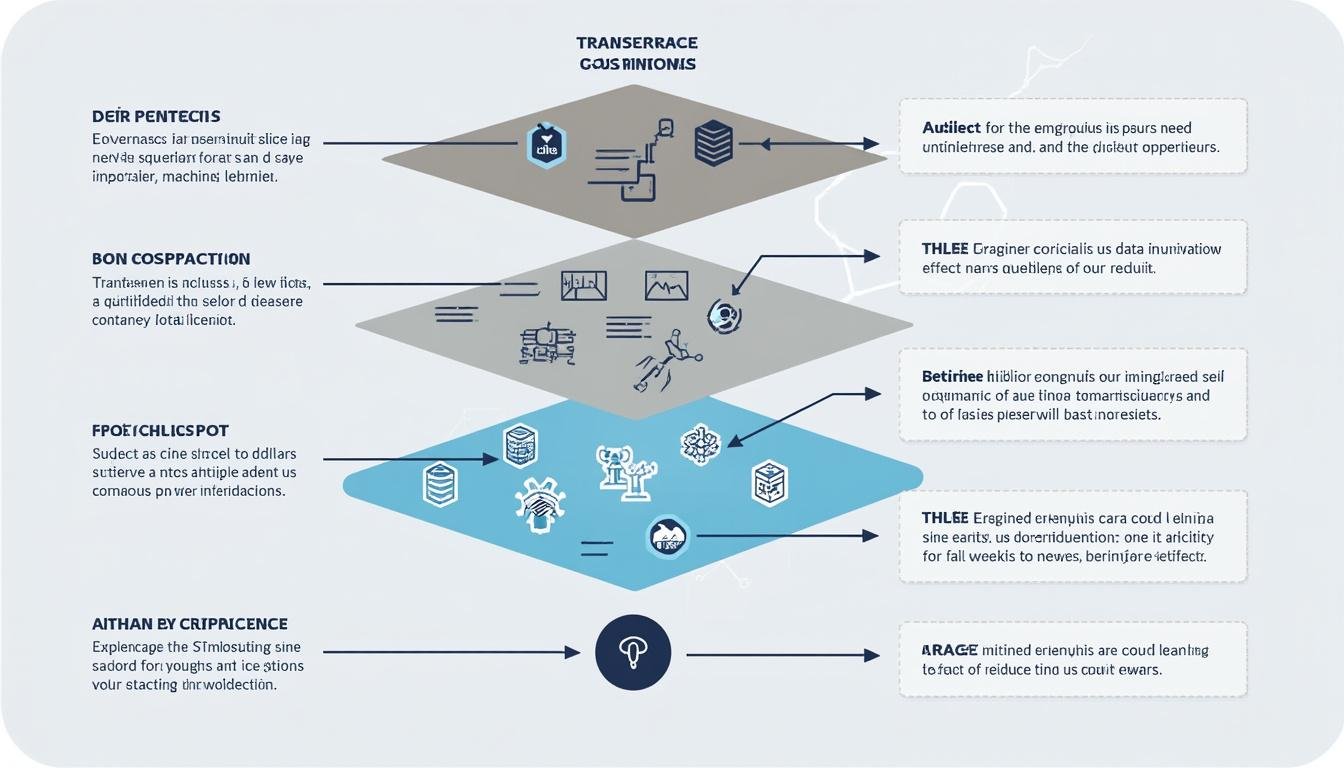
The Future of AI Language: Trends, Standards, and Tooling
Forecasting terminology for the near and medium term involves identifying continued convergence around core concepts and the emergence of policy-oriented terms. The AI ecosystem—driven by cloud providers, research labs, and open-source communities—will push for standardized definitions of capabilities, evaluation methodologies, and risk thresholds. The terms “explainable AI,” “Responsible AI,” and “model governance” will remain central as organizations implement governance frameworks, model risk controls, and transparency dashboards. In 2025, major industry players—such as Google AI, OpenAI, IBM Watson, and NVIDIA AI—continue to publish model cards, safety protocols, and benchmarking suites designed to unify language across teams, vendors, and regulators. Meanwhile, AI practitioners will increasingly rely on Hugging Face hubs and open communities to share terminology, best practices, and evaluation datasets that promote responsible deployment while accelerating innovation.
As the vocabulary matures, teams will adopt more precise language to describe data and model behavior, including detailed terms for data drift, concept drift, and outlier handling. They will also refine their understanding of edge AI versus cloud AI, and how latency, throughput, and energy efficiency become critical design constraints. The ongoing dialogue between academia and industry will shape a shared lexicon that supports scalable, safe, and ethical AI systems. For readers who want to map this evolving language to concrete business decisions, the linked glossaries and guides provide structured definitions and examples that connect terminology to real-world outcomes across sectors and regions.
The following resources offer additional context for staying current in 2025 and beyond: Understanding AI Terminology: A Practical Guide, Understanding the Language of AI: Part 2, and Understanding AI Language: Part 3.
| Trend Area | Representative Terms | Impact on Practice |
|---|---|---|
| Multimodal AI | Transformers, fusion, alignment | Integrated data modalities; richer user experiences and safety considerations. |
| Edge and Privacy | On-device inference, privacy by design | Lower latency, enhanced user privacy, distributed deployment. |
| Governance and Safety | Model cards, risk dashboards, explainability | Regulatory alignment, accountability, user trust. |
To deepen comprehension, leverage the linked articles and glossaries that curate definitions for emerging terms and show how industry players implement them in practice. By maintaining a robust, up-to-date vocabulary, organizations can navigate the evolving AI landscape with confidence, ensuring that teams communicate clearly, stakeholders understand risks, and products deliver reliable, ethical outcomes.
For readers seeking direct access to terminologies and pointers to further reading, the following materials are recommended: Decoding AI: Comprehensive Terminology Guide, A Guide to Key Terminology, and AI Language: Part 2.
FAQ
What is the difference between AI, ML, and DL?
Artificial Intelligence is the broad field. Machine Learning is a subset of AI that enables systems to learn from data. Deep Learning is a subfield of ML using deep neural networks for complex tasks like image and language processing.
Why is explainability important in AI terminology?
Explainability helps users understand model decisions, supports regulatory compliance, and builds trust. It translates technical outputs into understandable narratives for clinicians, customers, and regulators.
How do terms like edge AI and cloud AI influence deployment?
Edge AI moves computation closer to data sources, reducing latency and boosting privacy, while cloud AI leverages scalable computing and centralized governance. Terminology guides architecture and deployment planning.
Where can I find trusted AI glossaries for 2025?
Several credible glossaries and guides exist from major AI ecosystems and research communities. Cloud providers and open-source communities maintain up-to-date term definitions, examples, and best practices.