

En bref
- This glossary interprets key AI terms as they stand in 2025, spanning foundations to future-facing concepts.
- Major players shaping the terminology include OpenAI, Google DeepMind, IBM Watson, Microsoft Azure AI, Amazon Web Services AI, NVIDIA AI, Hugging Face, Anthropic, Cohere, and DataRobot.
- The guide balances theoretical definitions with practical use cases, showing how terms translate into real-world AI projects.
- Links throughout connect to deeper explanations about AI vocabulary and terminology for ongoing learning.
- Two embedded YouTube videos and two AI-themed images illustrate concepts visually while keeping accessibility and readability in mind.
- Expect structured sections, each with dense explanations, illustrative examples, and organized data in tables and lists.
In the rapidly evolving field of artificial intelligence, terminology acts as a shared compass. By 2025, the language of AI has widened beyond technical staff to product teams, policy makers, and everyday practitioners who work with AI-enabled tools. This glossary goes beyond simple definitions to explain how terms emerge from real systems, models, data practices, and governance considerations. It connects foundational ideas—such as machine learning, neural networks, and optimization—to advanced topics like reinforcement learning, variational autoencoders, and prompt engineering. You’ll encounter a mix of canonical terms that have stood the test of time and emergent phrases that reflect new architectures, tooling, and responsibility frameworks. For readers who want to see the landscape in action, the guide also highlights practical examples, case studies, and industry references from OpenAI and collaborators, as well as enterprise platforms from Microsoft Azure AI, Amazon Web Services AI, and IBM Watson.
To help you navigate this terrain, this article blends crisp definitions with contextual explanations. Expect concrete contexts—like how a transformer enables scalable language understanding, or how reinforcement learning shapes agents that learn from interaction. You’ll find lists that distill core terms, tables that compare concept families, and embedded media to illustrate ideas in motion. For ongoing reading, refer to sources such as Understanding the Language of Artificial Intelligence: A Glossary of Key Terms and Demystifying AI: A Guide to Key Terminology in Artificial Intelligence. These resources illustrate how terminology evolves with practice, research, and policy developments that matter in 2025.
As you read, you’ll notice a pattern: each term is situated in a practical context, illustrated by concrete examples and linked to related terms. This makes the glossary not just a reference, but a working toolkit you can apply when scoping projects, evaluating models, or communicating with teammates and stakeholders. Whether you’re a student building foundational knowledge or a professional refining a vocabulary for cross-functional work, the aim is to help you speak—confidently and accurately—about the language that powers today’s AI systems. The journey through these pages will reveal how terminology guides decisions, from data collection practices to model evaluation, deployment, and governance. It’s a modern map of AI’s linguistic landscape, designed to help you navigate the terrain with clarity and purpose.
Foundations of AI Terminology for Understanding Artificial Intelligence: From Concepts to Practical Language
At the core of AI terminology lies a set of foundational concepts that recur across disciplines, tools, and industries. These terms form the semantic scaffolding that enables engineers, data scientists, product managers, and policymakers to align their expectations and collaborate effectively. A strong grasp of these foundations makes it easier to read papers, interpret dashboards, and communicate requirements to stakeholders. Let’s explore the essential building blocks, their relationships, and how they translate into practical decisions in AI projects. The discussion will touch on core ideas such as Artificial Intelligence, Machine Learning, Neural Networks, and Optimization, while situating them within modern deployment contexts that include cloud platforms like Microsoft Azure AI, Amazon Web Services AI, and NVIDIA AI.
To organize this vast landscape, consider the following foundational terms and their roles:
- Artificial Intelligence (AI): The broad umbrella for machines performing tasks that typically require human intelligence, including perception, reasoning, learning, and decision-making. AI is not a single technology but a family of approaches that solve problems through data-driven processes and rule-based systems alike.
- Machine Learning (ML): A subset of AI focused on enabling systems to learn from data without being explicitly programmed for every outcome. This includes supervised, unsupervised, and reinforcement learning paradigms, each with distinct training signals and evaluation methods.
- Neural Networks: A family of models inspired by biological neurons that process information through layered transformations. Modern deep learning relies on large neural networks with many layers to extract hierarchical representations from data.
- Deep Learning: A subset of ML that uses deep neural networks to model complex patterns. Deep learning is especially powerful for unstructured data such as images, audio, and text, and is central to many state-of-the-art systems in natural language processing and computer vision.
- Supervised vs Unsupervised Learning: Supervised learning uses labeled data to map inputs to outputs; unsupervised learning discovers structure from unlabeled data, such as clustering or learning latent representations.
- Reinforcement Learning: A learning paradigm where an agent learns to take actions in an environment to maximize cumulative reward, guided by feedback signals that may be delayed or noisy.
- Loss Function and Optimization: The loss function quantifies error; optimization algorithms adjust model parameters to minimize this error, shaping the model’s performance and generalization.
- Transformers: A neural architecture that uses self-attention mechanisms to model long-range dependencies, enabling powerful language and multimodal models. They are foundational to contemporary AI systems, including LLMs.
- Training, Validation, and Test Sets: Training data teaches the model, validation data tunes hyperparameters and prevents overfitting, and test data provides an unbiased evaluation of final performance.
- Bias, Fairness, and Explainability: Concepts that address how models may reflect or amplify societal biases, how outcomes can be made fair, and how interpretable insights can be derived from complex models.
| Term | Core Idea | Practical Example | Related Terms |
|---|---|---|---|
| Artificial Intelligence | Broad capability of machines to perform tasks that mimic human intelligence. | Automated customer support bots, basic medical imaging analysis. | ML, AI ethics, automation |
| Machine Learning | Systems learn patterns from data to make predictions or decisions. | Spam filtering, price forecasting, recommendation systems. | Supervised learning, unsupervised learning, reinforcement learning |
| Neural Networks | Networks of interconnected nodes approximating complex functions. | Image recognition, speech-to-text, game-playing AI. | Deep learning, backpropagation |
| Transformer | Self-attention-based architecture for processing sequences with long-range dependencies. | Language models, translation, summarization. | Attention mechanism, BERT, GPT |
| Supervised Learning | Training with labeled data to map inputs to known outputs. | Credit scoring with labeled outcomes, image classification with labels. | Labeling, labeled datasets |
| Reinforcement Learning | Learning by interacting with an environment to maximize rewards. | Robotics control, game-playing agents, autonomous driving simulation. | Policy optimization, exploration-exploitation |
| Loss Function | Quantifies how far the model’s predictions are from the true values. | Cross-entropy for classification, mean squared error for regression. | Optimization, gradient descent |
| Optimization | Algorithms that adjust model parameters to minimize loss or maximize performance. | Stochastic gradient descent, Adam optimizer. | Learning rate, convergence |
For readers who want to see how these terms connect with current tools, consider exploring open-source and commercial ecosystems that shape practical usage. The interplay of terms like transformer models and reinforcement learning agents is visible in domains from language understanding to robotics. Industry leaders provide platforms and libraries that embody these ideas, such as Hugging Face for model sharing and DataRobot for automated ML pipelines. To deepen your comprehension, you can consult overview articles like Understanding the Language of Artificial Intelligence: A Glossary of Key Terms and Decoding AI: Understanding the Language of AI.
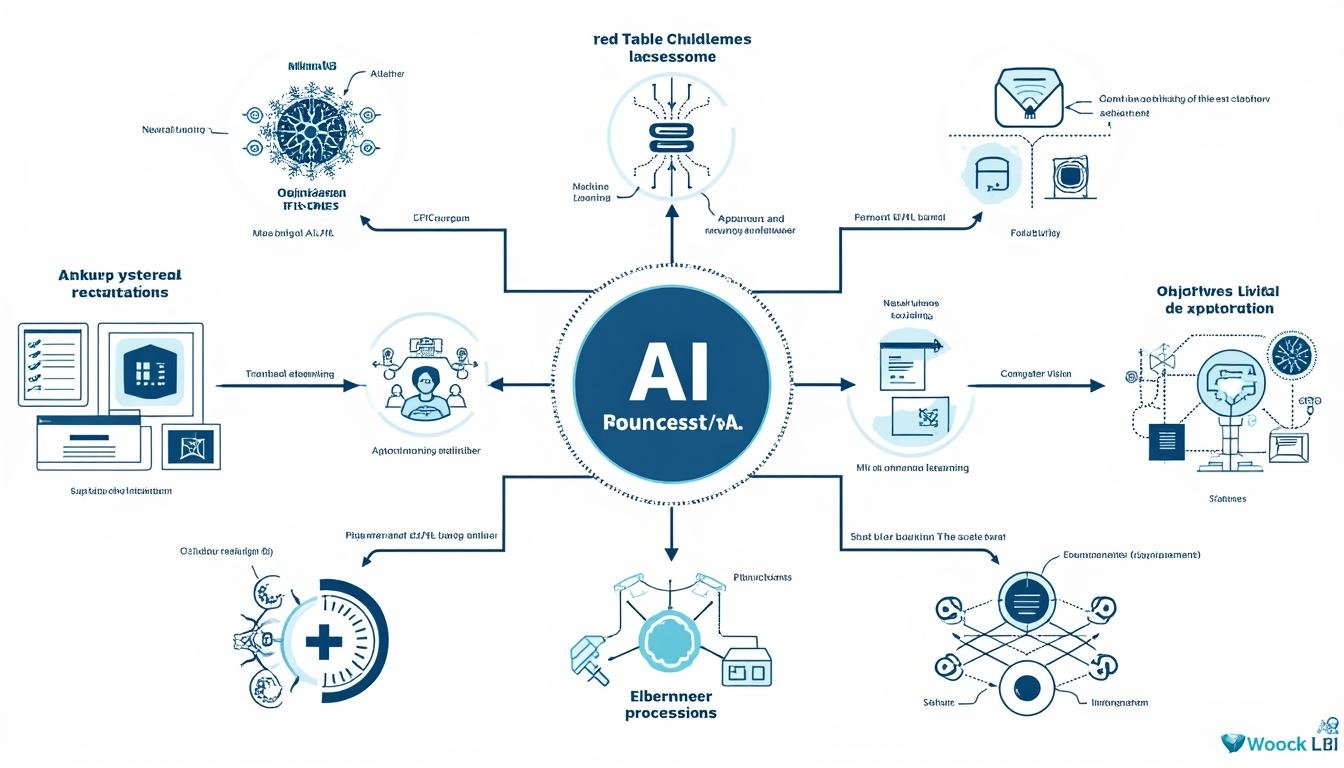
Foundational Concepts in Practice
In practice, teams use a shared vocabulary to plan experiments, interpret results, and communicate risk. The alignment between terms and governance processes is critical: a project will translate a term like explainability into concrete requirements for model cards, dashboards, and human-in-the-loop checks. As you engage with this vocabulary, you’ll notice a recurring pattern—terms organize into families (data, models, evaluation, deployment) and anchor decisions across lifecycle stages. A single term, such as data quality, cascades into data sourcing criteria, labeling guidelines, bias checks, and auditing practices. Building comfort with this vocabulary enables faster onboarding, more precise scoping, and clearer collaboration between data scientists, engineers, and non-technical stakeholders.
To explore how foundational language scales, look at how transformers enabled large-scale language understanding across domains. The shift from traditional recurrent architectures to attention-based models unlocked long-range context processing, bilingual or multilingual capabilities, and improved robustness to noisy inputs. This evolution reshaped how teams frame product requirements, from chatbots to content moderation to code generation. The journey also highlights the importance of evaluation metrics and benchmark datasets—critical for tracking progress and ensuring that improvements in one area do not inadvertently degrade another. For further reading, see discussions and glossaries featured by organizations and communities focused on AI ethics and governance.
Key takeaways from this foundational section include recognizing that AI terminology is not just academic; it is a practical tool that guides decision-making, risk assessment, and collaboration. The terms you learn here will recur as you move into more specialized domains, such as model architecture, data management, and governance frameworks. This section sets a baseline that will help you navigate subsequent topics with confidence and curiosity.
- Define terms in your team’s shared glossary to reduce miscommunication.
- Relate terms to concrete tasks (e.g., model selection, data labeling, evaluation planning).
- Use examples from real-world projects to anchor definitions in practice.
- Track terminology changes as new research and tools emerge.
| Term | Why it matters | Common pitfalls | Related Roles |
|---|---|---|---|
| Transformers | Revolutionize sequence modeling with attention; underpin modern LLMs. | Over-reliance on pretraining without fine-tuning; insufficient data diversity. | ML engineers, data scientists |
| Explainability | Builds trust; supports auditing and accountability. | Trade-offs with performance; techniques may be insufficient for complex models. | Ethicists, policy researchers |
| Data quality | Directly impacts model performance and fairness. | Ignoring data drift; neglecting labeling quality. | Data engineers, data stewards |
| Evaluation metrics | Quantifies progress and informs deployment decisions. | Using inappropriate metrics; overfitting to a benchmark. | ML researchers, QA engineers |
For additional insight into terminology and its practical implications, consult resources such as the glossary pages referenced above and related AI terminology discussions on industry sites. The aim is to build a vocabulary that is both precise and usable in everyday project work, from requirement gathering to deployment and governance.
Cores of Models and Architectures: Language Models, Vision, and Hybrid Systems
Exploring AI architectures reveals how diverse design choices shape capabilities, limitations, and use cases. The dominant thread in today’s AI landscape is the transformer-based architecture, which has propelled large language models (LLMs), multimodal systems, and adaptable agents across sectors. This section maps out the major model families, their primary strengths, and the contexts in which they shine. We’ll connect architectural concepts to practical decision points—such as when to prefer a pure language model versus a multimodal or hybrid approach—and point to emerging industry ecosystems and collaborations that influence design choices, including OpenAI, Google DeepMind, NVIDIA AI, and Hugging Face for community-driven model sharing and tooling. Throughout, you’ll see how the vocabulary expands to cover not just model types but also deployment patterns, governance considerations, and performance trade-offs.
Key terms in this section include Model Architecture, Transformer, Encoder-Decoder, Pretraining, Fine-tuning, Multimodal, Prompt Engineering, and Inference. Each term is often part of a layered decision process: the architecture determines what the model can represent, the training data shapes what it learns, and the deployment setup defines how users interact with it. For instance, a typical decision path might involve choosing a transformer-based LLM for natural language tasks, then enhancing it with reinforcement learning from human feedback (RLHF) to align outputs with user intent and policy constraints. Enterprises frequently balance model capacity with latency, computational cost, and privacy requirements—factors that steer choice between on-premises infrastructure, cloud services (such as Microsoft Azure AI or Amazon Web Services AI), or hybrid configurations.
Developments in multimodal models fuse text, image, and other modalities into a single system. This capability broadens the scope of applications—from document understanding to cross-modal search and robot perception. The glossary keeps pace with these breakthroughs by clarifying related terms like vision transformers (ViTs), cross-attention, and multimodal fusion, as well as the safety and evaluation concerns they raise. For readers seeking deeper dives, the landscape is littered with linguistic and visual benchmarks, model cards, and governance checklists that help teams assess risk and track responsible deployment.
Practical considerations include the availability of high-quality labeled data, the interpretability of model decisions, and the ability to audit outputs. A subset of companies has built robust ecosystems around these ideas, including IBM Watson for enterprise analytics, Anthropic for alignment-focused research, and Cohere for language services in business contexts. Readers should also note that the model landscape is intertwined with platform offerings from Google DeepMind and OpenAI, which provide both models and developer tooling that shape industry standards. To explore these topics further, you can consult broader resources on AI terminology and architecture across the web.
Practical guidance for practitioners includes a mind-set shift: think in terms of the lifecycle—data, model, evaluation, deployment, and governance—rather than in isolated components. When evaluating whether to invest in a transformer-based LLM versus a purpose-built model, consider your use case’s language complexity, timing constraints, and regulatory environment. This perspective helps teams avoid over-engineering and aligns technical choices with business objectives. The following table offers a snapshot of common model families and their typical use cases, while the section’s narrative illustrates how to make choices that match both capability and constraints.
| Model Family | Core Capability | Ideal Use Cases | Key Trade-offs |
|---|---|---|---|
| Language Models (LLMs) | Generates and understands human-like text; excels at reasoning with large context windows. | Content generation, coding assistants, tutoring, customer support | Cost, latency, risk of hallucinations, need for alignment |
| Vision Transformers (ViTs) | Applies transformer architecture to image data; strong performance on visual tasks | Image classification, object detection, medical imaging | Data-hungry, computationally intensive |
| Hybrid/Multimodal Models | Integrates multiple data modalities (text, image, audio) for richer representations | Cross-modal search, document understanding with images, robotics perception | Complexity, calibration across modalities |
| Specialized Models | Tailored to specific domains (e.g., code, chemistry, biology) | Domain-specific analytics, regulated industries | Niche data requirements; smaller ecosystems |
For hands-on exploration, check the recommended glossary entries and model documentation that accompany contemporary AI libraries and services. A deeper dive might include reading about The Jargon: A Guide to AI Terminology and related content that describes how practitioners interpret and implement these constructs in real projects. In addition, industry participants like Hugging Face and Cohere publish model cards and deployment guides that help teams manage expectations and safety considerations when integrating AI capabilities into products.
Section summary: The architecture section emphasizes that model families are not isolated choices but parts of a larger system design that includes data, tooling, and governance. By understanding the strengths and constraints of LLMs, ViTs, and hybrid models, teams can map the right technology to the right problem and plan for responsible, scalable deployments.
Data, Training, and Evaluation: The Fuel of AI Systems
Without data and careful training, models cannot learn, adapt, or perform as expected. This section unpacks the terminology and concepts that govern how data is acquired, prepared, and used to train AI systems, along with how performance is measured and validated. You’ll encounter terms related to data pipelines, labeling, data governance, and evaluation paradigms, all of which influence the reliability and fairness of AI in production. While the vocabulary mirrors the needs of data scientists, it also speaks to policy-makers, product leaders, and compliance officers who oversee AI systems in real-world contexts. The discussion incorporates perspectives from major platforms and research groups so you can see how the terminology translates into practical workflows on clouds like Microsoft Azure AI, Amazon Web Services AI, and others, while acknowledging the broader ecosystem that includes OpenAI, Google DeepMind, and IBM Watson.
At the heart of data terminology are concepts such as Dataset, Prototype, Data Labeling, Data Drift, Data Provenance, and Data Governance. Each term anchors a set of practices that determine the quality and trustworthiness of AI systems. A reliable dataset is not simply large; it is representative, clean, and well-documented. Data drift—when data distributions shift over time—poses ongoing challenges. Effective data governance encompasses privacy protection, ethical considerations, and traceability to ensure that data handling aligns with organizational policies and regulatory requirements. In practice, teams must plan for data versioning, lineage, and audits, particularly when models operate in sensitive domains such as healthcare, finance, or criminal justice.
The training lifecycle is a sequence of stages: data collection, data preprocessing, model training, validation, hyperparameter tuning, and deployment readiness. The evaluation phase uses metrics that align with the task—classification accuracy, precision, recall, F1-score for classification; BLEU, ROUGE for translation and summarization; perplexity for language modeling accuracy. Practical evaluation also includes human-in-the-loop assessments to gauge user experience, safety, and reliability. A robust evaluation strategy accounts for edge cases, biased outcomes, and the potential for model failures, ensuring opportunities to improve through iterative development. To ground these concepts, you can consult glossaries and guides that describe how millions of data points become training signals and how iterative experimentation shapes model behavior over time.
Businesses often rely on external AI ecosystems to accelerate data-driven development. The vocabulary used by Anthropic and DataRobot exemplifies governance-first thinking, while tooling from Hugging Face and Cohere supports efficient experimentation and deployment. For extended reading on terminology and data practices in AI, you can explore resources linked earlier, including a glossary focused on vocabulary and usage in AI projects. A broader view of data and training terminology can be found in discussions about AI terminology and vocabulary.
Practical checklist for data-centric AI projects:
– Ensure labeled data quality and diversity to avoid biased outcomes.
– Implement robust data provenance and versioning to enable auditability.
– Monitor data drift and set up automated alerts for distribution shifts.
– Align evaluation metrics with real-world success criteria and user impact.
– Integrate human oversight where necessary to maintain safety and reliability.
| Phase | Key Terms | Typical Methods | Risk/Considerations |
|---|---|---|---|
| Data Collection | Dataset, Data Provenance | Data scraping, data licensing, sampling strategies | Privacy, consent, bias exposure |
| Data Preparation | Data Labeling, Preprocessing | Normalization, augmentation, labeling protocols | Label noise, labeling bias |
| Training | Training, Hyperparameters, Optimization | Gradient descent, learning rate schedules | Overfitting, computational cost |
| Evaluation | Metrics, Validation, Test | Cross-validation, holdout sets | Misaligned metrics, leakage, bias |
For practical adoption, teams often publish model cards and data sheets to document intended use, limitations, and safety considerations. This transparency supports responsible deployment and helps stakeholders understand risks, governance requirements, and compliance needs. To broaden your reading, consider the AI terminology guides that focus on vocabulary and the process of aligning data practices with governance frameworks.
Industry Language: Applied AI Terminology in Projects and Products
Industry-focused terminology translates academic concepts into actionable plans, milestones, and governance protocols that guide real-world AI initiatives. This section emphasizes the language used in product teams, data platforms, and enterprise organizations as they move from experimental prototypes to production-grade AI systems. Concepts such as ML Ops (MLOps), Prompt Engineering, Guardrails, and Policy shape how models are built, tested, deployed, and monitored in complex environments. The vocabulary helps teams balance speed and reliability while maintaining compliance with privacy and safety standards. In practice, you’ll see a blend of technical terms and business phrases that reflect the multifaceted nature of modern AI projects, including collaborations with cloud providers and AI service ecosystems from leaders like Microsoft, Amazon, and NVIDIA.
Essentials for industry practice include the following terms and concepts:
- Prompt Engineering: Crafting prompts and best practices to elicit reliable, safe, and useful responses from language models.
- MLOps: End-to-end lifecycle management for ML systems, including CI/CD for models, monitoring, and governance.
- Guardrails: Safety constraints and policies embedded during design and operation to prevent harmful or unsafe outputs.
- Model Card: Documentation describing model purpose, training data, limitations, and evaluation results to support transparency.
- Ethics & Compliance: Frameworks and standards governing fairness, accountability, and privacy.
- Explainability & Auditing: Mechanisms to understand model decisions and verify compliance with requirements.
- Data Governance: Policies and processes to manage data quality, privacy, and usage rights.
Practical case studies illustrate how these terms shape project planning and execution. For example, a product team may specify a prompt engineering workflow to optimize user interactions while enforcing guardrails that prevent unsafe outputs. Data governance policies can drive data minimization and privacy-preserving techniques when handling sensitive information, ensuring that deployments align with regulatory expectations. In enterprise settings, practitioners use platform-specific features—from cloud-native ML services to on-premise acceleration—to meet latency, cost, and security requirements. The vocabulary also extends to collaboration with AI vendors and research labs that provide specialized capabilities, including IBM Watson for enterprise analytics and DataRobot for automated ML pipelines. You can explore more on these topics through AI terminology resources and industry glossaries linked in the references.
To anchor concepts and provide practical guidance, consider reading about AI terminology in detail through the referenced links, including Key AI Terms Explained and A Guide to Understanding AI Vocabulary. These sources offer structured explanations that complement the in-text definitions and provide additional examples and frameworks for industry professionals.
In practice, the applied language emphasizes continuous monitoring, governance, and risk assessment. Teams define success in measurable terms—uptime, latency, accuracy, and user satisfaction—while maintaining accountability through clear policies and documentation. The governance dimension becomes increasingly important as AI systems scale and touch more aspects of daily life, including finance, health, and public services. The vocabulary thus evolves to reflect both technical advances and the growing importance of responsible AI. This section serves as a bridge from theory to implementation, showing how the language of AI becomes a set of actionable tools that drive value while honoring safety and ethics.
Interlude: After exploring industry language, remember to reference the AI glossary and model documentation for precise usage in your own projects. The next section shifts focus to ethics, governance, and the future direction of AI terminology, where terms take on responsibility and accountability in addition to capability.
To broaden your understanding, you can also consult practical glossaries and case studies linked in our recommended resources. The interplay between prompt engineering, governance, and industry adoption demonstrates how terminology translates into concrete workflows, enabling teams to deliver reliable AI products while maintaining trust and compliance.
Ethics, Governance, and the Future: Terminology Shaping Responsible AI
As AI systems become embedded in critical decision-making, the vocabulary expands to accommodate questions of fairness, accountability, transparency, and safety. This final section surveys ethics- and governance-related terms, emphasizing how organizations conceptualize, measure, and mitigate risk while scaling AI responsibly. You’ll encounter terms such as algorithmic fairness, bias mitigation, explainability, model cards, risk assessment, privacy-preserving techniques, and regulatory compliance. The aim is to connect theoretical debates to practical practices that organizations implement in real projects, especially when dealing with sensitive data or high-stakes outcomes.
Key ethics and governance terms include:
- Algorithmic Fairness: Ensuring that models do not produce systematically biased or discriminatory results across groups defined by protected attributes.
- Explainability & Interpretability: Techniques and practices that reveal how models reason about inputs and arrive at outputs, enabling user trust and regulatory scrutiny.
- Model Cards: Structured documentation that describes a model’s purpose, data, limitations, and performance under diverse conditions.
- Risk Assessment: Systematic evaluation of potential harms, including privacy, safety, and societal impact, with mitigation plans.
- Privacy-Preserving Techniques: Methods such as differential privacy, federated learning, and secure multiparty computation that protect user data.
- Accountability and Auditing: Mechanisms to track decisions, ownership, and responsibility in AI deployments.
- Governance Frameworks: Policies, standards, and processes that guide AI development, testing, deployment, and monitoring.
In practice, responsible AI involves policies and procedures that balance innovation with risk management. Organizations establish governance boards, risk registers, and ongoing validation processes to ensure that AI systems behave as intended and remain within acceptable risk boundaries. The language of governance—risk, compliance, accountability—complements the technical vocabulary by providing a framework for decision-making and oversight. This alignment is critical as AI systems operate in complex environments with diverse stakeholders, including regulators, customers, and internal teams. The terms and concepts discussed here are not abstract; they shape how products are built, tested, and monitored to protect users and organizations alike. For further reading on governance and ethics in AI, you can consult the glossary resources cited earlier and explore additional materials from industry leaders and research communities.
| Ethics/Governance Topic | Primary Concern | Mitigation Strategies | Related Practices |
|---|---|---|---|
| Fairness | Prevent biased outcomes that disadvantage groups. | Bias audits, diverse data, fairness metrics, policy constraints | Risk assessment, model cards |
| Explainability | Make model decisions understandable to users and regulators. | Interpretable models, post-hoc explanations, human-in-the-loop | Auditing, governance |
| Privacy | Protect data privacy while enabling useful insights. | Differential privacy, federated learning, data minimization | Regulatory compliance, data governance |
| Accountability | Clarify responsibility for decisions and outcomes. | Model cards, governance boards, traceability | Auditing, risk assessment |
To deepen your understanding of ethical and governance vocabularies in AI, consult ongoing discussions and glossaries from leading organizations. Links to foundational resources, including those listed in the opening sections, provide broader perspectives on responsible AI, safety frameworks, and regulatory considerations that shape how AI is built and used in 2025 and beyond. For a closer look at vocabulary and terminology aligned with governance and ethics, you can explore additional resources in the AI terminology ecosystem and industry glossaries cited in this article.
As we close this exploration of terminology, consider how the language you use shapes expectations, risk perception, and the trajectory of AI projects. By mastering foundational concepts, architecture terms, data and training language, industry usage, and ethics/governance vocabulary, you position yourself to contribute effectively to AI initiatives that are not only capable but also trustworthy and responsible. The field will continue to evolve, and so should your vocabulary—through ongoing reading, hands-on experimentation, and thoughtful engagement with policy and governance discussions.
Further reading and exploration can be guided by these links:
– Understanding the Language of AI: Glossary and Key Terms
– The Jargon: A Guide to AI Terminology: AI Terminology Guide
– Demystifying AI: A Guide to Key Terminology in AI: Key Terminology Guide
– A Guide to Understanding the Language of AI: Language of AI
– Understanding AI Vocabulary: AI Vocabulary
What is the core purpose of AI terminology?
AI terminology serves as a shared language that enables cross-disciplinary teams to plan, build, and govern AI systems with clarity. It helps align goals, measure progress, and communicate risk across stakeholders.
Why are data terms critical in AI projects?
Data terms define how data is collected, prepared, labeled, and governed. They influence model performance, fairness, privacy, and auditability, making data practices foundational to trustworthy AI.
How do governance terms affect deployment?
Governance terms like guardrails, model cards, and risk assessments translate into policies, checks, and documentation that guide safe deployment, ongoing monitoring, and accountability.
What is the role of prompt engineering in industry?
Prompt engineering shapes how users interact with language models, improving reliability and user experience while enabling safety constraints and alignment with business goals.
Where can I learn more about AI terminology?
Explore glossary resources linked throughout this article, as well as materials from OpenAI, Google DeepMind, IBM, Hugging Face, Anthropic, Cohere, and DataRobot for practical and academic perspectives.